 English
 Arabic
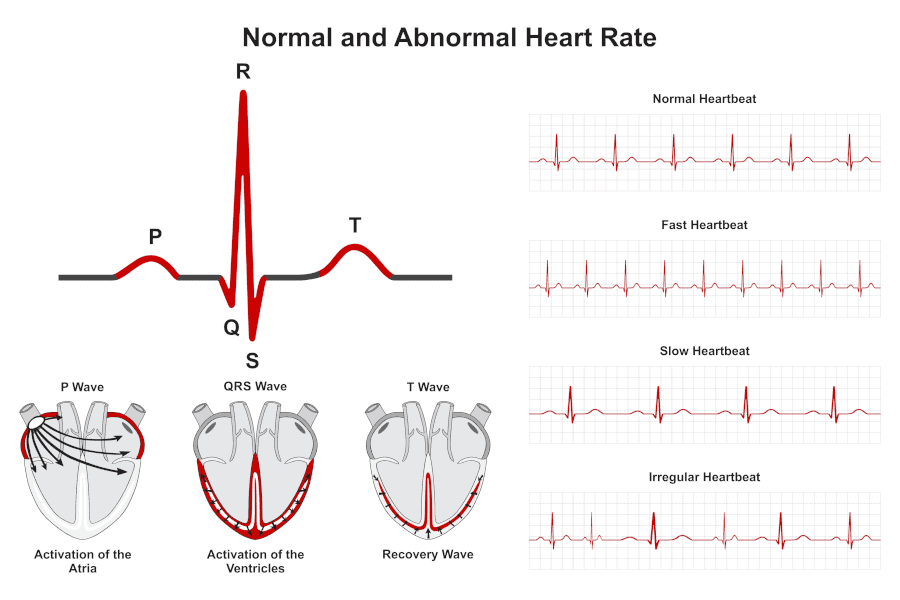
Most people notice it at some point — a flutter in the chest, a heartbeat that suddenly races for no obvious reason, or an odd sensation that it “skipped” for a moment. Usually it passes, and you carry on. But when it keeps happening, or when it leaves you breathless, dizzy, or genuinely unsettled, it stops being easy to dismiss.
An irregular heartbeat — medically known as a cardiac arrhythmia — is not a single condition. It is an umbrella term for any disruption in the rhythm of the heart’s electrical system, and it ranges from entirely harmless to clinically urgent. The most important thing you can do if you’re experiencing symptoms is get it properly assessed by a cardiologist in Dubai. Because the question isn’t just whether your heart is beating irregularly — it’s why, and what to do about it.
Here is what the heart doctors in Dubai UAE at German Heart Centre actually do when a patient comes in with an irregular heartbeat — from the first appointment through to treatment.
The First Step: Understanding What’s Actually Happening
Before any test is ordered, a good cardiologist listens. At German Heart Centre, every arrhythmia assessment begins with a thorough clinical history — when you first noticed the irregular heartbeat, how long episodes last, what seems to trigger them, what makes them stop, and whether you have any associated symptoms like breathlessness, chest discomfort, or fainting.
This conversation matters more than most patients realise. An irregular heartbeat that starts suddenly and stops just as suddenly, with no other symptoms, points toward a different diagnosis than one that builds gradually, causes chest pressure, and leaves you exhausted. The clinical history shapes every decision that follows.
Your doctor will also ask about your broader health picture: any history of hypertension, diabetes, heart failure, thyroid problems, or previous cardiac events. These aren’t routine questions — they directly influence both the likelihood of specific arrhythmia types and the safest treatment pathway.
How an Irregular Heartbeat Is Diagnosed
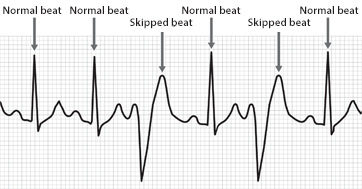
The challenge with arrhythmias is that many of them are intermittent. Your heart might behave perfectly normally during a clinic visit, even if it was racing or skipping just hours before. So the diagnostic tools used need to cast a wide enough net to capture what’s actually happening — not just what’s happening right now.
Electrocardiogram (ECG)
The ECG is almost always the starting point. It’s quick, painless, and takes a snapshot of the heart’s electrical activity at that exact moment. For some arrhythmias — particularly persistent ones like atrial fibrillation — it provides an immediate answer. For intermittent arrhythmias, it’s the beginning of the investigation rather than the end of it.
Our ECG test in Dubai is available on the same day and the results are reviewed directly by our cardiac team. There’s no waiting for a referral back to a GP — the specialist reads it with you in the room.
Holter Monitoring
If the ECG doesn’t capture the arrhythmia — which is common — the next step is typically a Holter monitor. This is a small, wearable device that records every single heartbeat over a continuous 24 to 48 hour period while you go about your normal life. You wear it home, sleep in it, exercise in it, and keep a diary of any symptoms you notice. When you return it, the recording is analysed to identify any rhythm disturbances and match them against the symptoms you recorded.
This is where intermittent arrhythmias are most often caught. The episode that never happens in the clinic has a habit of appearing during a walk, during a stressful meeting, or at 2am. The Holter captures all of it.
Our Holter monitoring test in Dubai is one of the most requested diagnostics at German Heart Centre, particularly for patients with palpitations that come and go. The monitors are discreet, lightweight, and can be worn without disrupting your daily routine.
Cardiopulmonary Exercise Testing (CPET)
Some arrhythmias only surface under physical exertion. If your symptoms consistently appear during or after exercise, a cardiopulmonary exercise test (CPET) may be the most informative next step. It monitors the heart’s electrical activity and functional response under controlled, graduated exercise conditions — capturing rhythm disturbances that neither a resting ECG nor a Holter would reliably detect.
It’s also a valuable tool for patients who want to understand their safe exercise limits — particularly those returning to physical activity after a cardiac event, or those in high-demand roles such as aviation where cardiac fitness standards apply.
Blood Tests
Several systemic conditions directly cause or worsen irregular heartbeats, and they won’t show up on any cardiac recording. A thyroid function test is essential — an overactive thyroid is a common and treatable cause of palpitations and fast heart rates that gets missed far more often than it should. Kidney function tests assess electrolyte balance, which directly governs cardiac electrical stability. And liver function tests can identify metabolic contributors in patients with certain cardiac conditions.
The point of these tests isn’t to look for everything at once. It’s to rule out reversible causes that, if treated, might resolve the arrhythmia entirely without the need for long-term cardiac medication.
What Determines Which Treatment Is Right for You
There is no single answer to how an irregular heartbeat should be treated, because the treatment depends entirely on what type of arrhythmia it is, how frequently it occurs, what symptoms it produces, and what the patient’s overall cardiac health looks like. A 35-year-old with occasional, symptom-free PVCs and a structurally normal heart is managed very differently from a 65-year-old with persistent atrial fibrillation and an existing heart failure diagnosis.
At German Heart Centre, treatment decisions are made by the German cardiologists in UAE based on the complete clinical picture, not just a single test result. Here is how the main options work in practice.
Treatment Options for an Irregular Heartbeat
Lifestyle and Trigger Management
For many patients — particularly those with occasional premature beats or mild SVT — the most effective first step is identifying and reducing triggers. Excess caffeine, alcohol, poor sleep, high stress, dehydration, and thyroid dysfunction are all known arrhythmia drivers that can be meaningfully addressed without medication.
In the UAE context, summer dehydration and the electrolyte loss that comes with it are particularly relevant triggers. A patient whose palpitations worsen every June and improve in winter may not need antiarrhythmic medication — they may need better hydration, electrolyte management, and a conversation about how summer heat affects cardiac electrical stability.
Medication
When medication is needed, the choice depends on the arrhythmia type. Rate-control drugs — such as beta-blockers or calcium channel blockers — slow a fast heart rate without necessarily restoring a normal rhythm. Rhythm-control drugs aim to restore and maintain a normal rhythm. Anticoagulants are prescribed specifically for atrial fibrillation patients, because AFib increases the risk of blood clots and stroke — and this risk needs to be addressed regardless of whether the rhythm itself is being controlled.
Medication for arrhythmia is not a permanent fixture for every patient. Some people take it short-term while another intervention is planned. Others take it long-term as ongoing management. The approach is reassessed at every follow-up with your heart doctor in Dubai UAE.
Cardioversion
For patients with persistent atrial fibrillation or certain other sustained arrhythmias, cardioversion — either electrical or pharmacological — is used to restore normal rhythm. Electrical cardioversion delivers a controlled, brief electric shock to the heart under sedation, resetting the electrical system. It is not the dramatic procedure that films might suggest — it is performed safely in a clinical setting with full monitoring and takes only a few minutes.
Whether cardioversion holds long-term, or whether the arrhythmia returns, depends significantly on the underlying cause and how long the arrhythmia has been present. This is one reason why prompt assessment matters — the longer certain arrhythmias persist, the harder they can be to reverse.
Catheter Ablation
Catheter ablation is the most targeted treatment available for many arrhythmias. A thin catheter is guided to the heart through a blood vessel, identifies the precise tissue responsible for generating the abnormal electrical signal, and eliminates it using radiofrequency energy or freezing. It does not require open surgery, and for suitable candidates, it offers the possibility of long-term rhythm control without ongoing medication.
It is particularly effective for SVT, certain types of atrial flutter, and specific patterns of AFib. Our interventional cardiology team at German Heart Centre performs catheter ablation as part of a comprehensive arrhythmia management pathway. Patient selection is important — not every arrhythmia is suitable, and the decision is made after full diagnostic workup.
Pacemakers and Implantable Devices
When the heart beats too slowly — or when the electrical pathway between the upper and lower chambers is blocked — a pacemaker monitors the heart continuously and delivers a small electrical impulse whenever the natural rhythm falls too slow. Modern pacemakers are compact, reliable, and require no ongoing effort from the patient once implanted.
For patients at high risk of life-threatening ventricular arrhythmias, an implantable cardioverter-defibrillator (ICD) performs the same monitoring function but can also deliver a shock to restore rhythm if ventricular fibrillation or dangerous ventricular tachycardia is detected. Our cardiac surgery and interventional cardiology teams manage the full device implantation pathway, from assessment through to follow-up.
What Many Patients Get Wrong About Irregular Heartbeats
The most common mistake is waiting. Patients often spend months attributing palpitations to stress, coffee, or the UAE heat before seeking assessment. By the time they come in, some arrhythmias have been present long enough to make treatment more complex than it needed to be.
The second most common mistake is assuming that because an episode passed, there’s nothing to investigate. Intermittent arrhythmias are, by definition, intermittent. They go away. They come back. And while they are absent, the underlying electrical or structural problem that causes them remains.
An ECG test in Dubai and a Holter monitor together cost far less time and worry than an unmanaged arrhythmia that eventually presents as something more serious. If your heart has been doing something that concerns you — even occasionally — that’s enough reason to have it looked at.
When You Should See a Cardiologist
Book a consultation with a cardiologist in Dubai if you experience:
- Palpitations that last more than a few minutes, or that keep coming back
- Dizziness, lightheadedness, or a feeling that you might faint during an episode
- Breathlessness that appears alongside a fast or irregular heartbeat
- Chest tightness or discomfort that coincides with rhythm changes
- A family history of arrhythmia, sudden cardiac death, or inherited heart conditions
- A new diagnosis of hypertension, diabetes, or thyroid disease — all of which increase arrhythmia risk
Go directly to emergency cardiac care if you experience chest pain with a racing heartbeat, collapse or loss of consciousness, or sudden severe breathlessness.
Arrhythmia Diagnosis and Treatment at German Heart Centre Dubai
Our team of German cardiologists in UAE has been managing cardiac arrhythmias at Dubai Healthcare City for over 20 years. Every patient who comes in with an irregular heartbeat is assessed by an experienced specialist — not a registrar, not a nurse practitioner. The clinical depth comes from years of training and practice at leading European institutions, and it shows in the quality of diagnosis and the care taken in treatment planning.
Dr. Ashraf Hussein, Dr. Eissa Mhanna, Dr. Kashif Souri, Dr. Helge Alexy, Dr. Caspar A Boerner, Dr. Beate Wild, and Dr. Masahide Nagano are all available for cardiology consultations. For complex arrhythmia cases requiring surgical or device-based intervention, Prof. Dr. Sergey Leontyev and Dr. Uwe Klima provide the full surgical capability within the same centre — meaning you are never passed from clinic to clinic for different parts of your care.
If you have a child with a suspected rhythm problem, Dr. Jörg Müller-Scholtz leads our paediatric cardiology service and sees children of all ages for arrhythmia assessment and management.
Our cardiology care packages offer a structured first-assessment pathway, and our high-risk care packages are available for patients who need closer monitoring and more frequent follow-up. Check your insurance coverage or visit our doctors page to book an appointment. You can also read more on cardiac health across our heart health blog.